Navigating the Memory Maze
How to Tame Overlaps in TIA Portal and Build Resilient PLC Architectures.
2/10/20263 min read
01
The Silent Saboteur in Your PLC Program
Ever felt like your PLC program has developed a mischievous streak, spitting out nonsensical data or crashing when you least expect it? The culprit might be lurking in the shadows: a memory overlap.
"Visualize two tenants mistakenly assigned the same apartment – utter pandemonium ensues!"
This isn't just a minor inconvenience. Memory overlaps can lead to data corruption, unpredictable system behavior, and even costly operational shutdowns. The stakes are high. Consider this your field guide to TIA Portal's detective tools.
02
Blast from the Past: The Evolution of PLC Memory Management
Let's journey back to the "Wild West" era of PLC programming, specifically the days of STEP 7 Classic. Programmers were essentially memory cartographers, meticulously charting every I0.0, Q0.1, M10.2 by hand.
Symbolic Superpowers
TIA Portal replaced cryptic raw addresses with descriptive names like "Motor_Start", fundamentally changing developer focus.
Optimized Revolution
S7-1200/1500 Optimized Data Blocks lack fixed addresses, allowing the PLC to dynamically allocate for peak performance.
The underlying philosophy shifted: Siemens took on the responsibility of managing the intricacies of address assignment, allowing programmers to concentrate on the core logic.
03
The Great Debate: Absolute vs. Symbolic
Why does symbolic addressing now reign supreme? Modern S7-1500 CPUs thrive with optimized, symbolic access, leading to significant performance gains. Code using descriptive tags reads like a narrative, boosting maintainability.
The M-Tag Minefield
Those venerable "M-tags" (global memory bits) are prime suspects for accidental overlaps. The community often debates whether they should be banished or strictly confined to system functions.
04
Becoming a Memory Detective: TIA Portal's Oracle
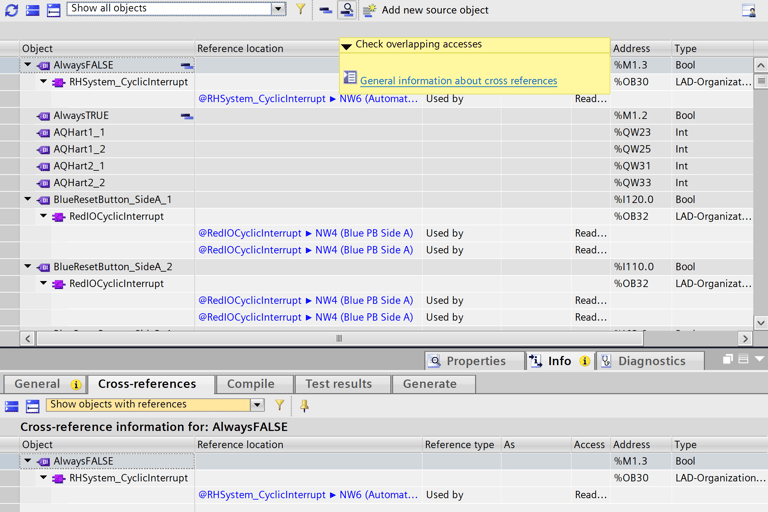
TIA Portal offers tools to transform you into a memory detective. The Cross-Reference Tool is your Sherlock Holmes. It pinpoints exactly where tags are used and flags "overlapping accesses."
1
Check Overlapping Accesses
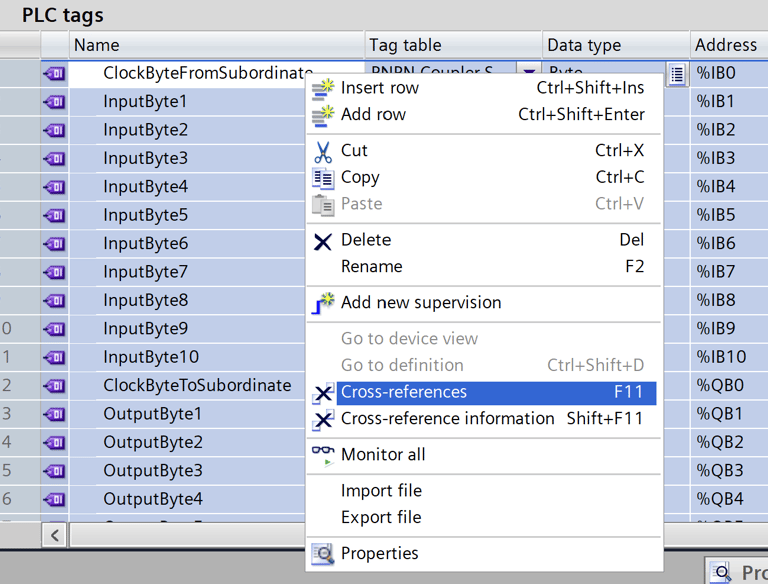
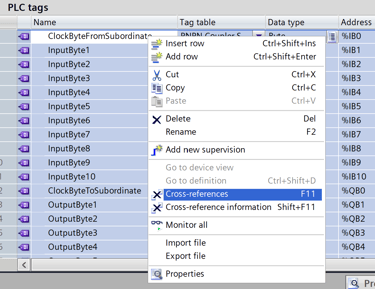
Initiate a check to reveal conflicts in your tag table by highlighting all tags for inspection. Then right-click on them and select cross-reference to show the cross-reference work window.
2
Visual Cues
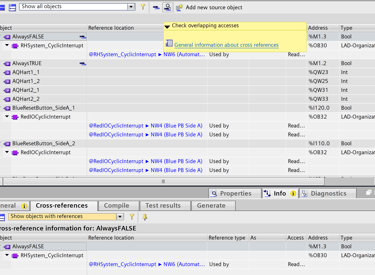
Watch for special overlap icons that highlight flagging problematic memory areas. There are buttons for checking and marking overlapping access at the top of the cross-reference window. When overlaps are found, there will be markings just beside the tag name. Then, to further inspect, there is a middle work window that can be pulled up if collapsed, which further details which memory areas the overlap occurs in.
3
Type Selection First
Always select the datatype first when creating tags to prevent address inheritance errors, then type out the tagname second.
05
The Crystal Ball: The Future of PLC & AI
The AI revolution, exemplified by Siemens Industrial Copilot, is set to change the game. Imagine an assistant capable of generating SCL code, deciphering logic, and suggesting fixes before you even hit 'Compile'.
AI-Driven Integrity
Automated tag validation and robust memory safety will become standard. AI could dramatically reduce manual errors, relegating accidental overlaps to the annals of history.
Program Smarter, Not Harder
Memory overlaps pose a tangible threat, but TIA Portal provides potent tools to ensure the stability and efficiency of your PLC programs. Your action plan: embrace symbolic addressing, champion optimized blocks, and leverage diagnostic capabilities.